
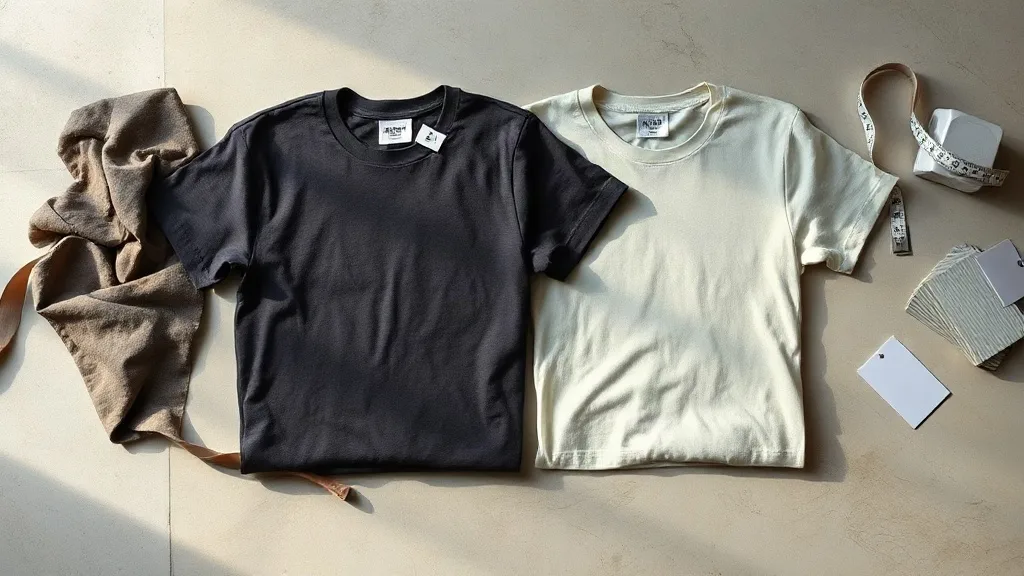
Walk into any print shop that handles streetwear accounts and you will hear the same two names come up when a client wants a heavyweight tee that does not cost a fortune: shaka wear and smart blanks. Both brands occupy the value end of the heavyweight cotton market, and on paper their spec sheets look almost interchangeable. In practice they behave differently on press, after washing, and on a customer's body. This guide breaks down those differences from the perspective of someone who has pulled both out of the box, printed on them and worn them through a dozen laundry cycles.
Why blank selection matters more than most brands admit
Your blank decides three things you cannot fix later: how the shirt drapes, how it holds ink after repeated washing, and how much margin you keep per unit. A blank that shrinks two sizes in the dryer turns a profitable order into a refund request. A blank that feels thin at the collar looks cheap on a shelf no matter how good the print is. Buyers who treat the blank as a commodity usually learn this the hard way on their second or third drop.
That is the reason both shaka wear and smart blanks are worth understanding at the fabric level rather than the price-per-piece level. The gap between them is small in dollars and large in feel.
Shaka Wear: heavyweight cotton built for streetwear
Shaka Wear built its reputation on thick, boxy tees that read as premium in photos. The classic crewneck sits in the 6 to 7 ounce range depending on the style, with a dense knit that resists the see-through problem common in cheaper blanks. The collar is ribbed and holds its shape, which matters if you plan to sell a shirt that will be worn weekly.
Fit and silhouette
Most Shaka cuts run relaxed through the chest and shoulder with a slightly longer body. If your customer base skews toward oversized styling, you can size up once and get the look without the shirt turning into a dress. The armholes are cut a little lower than a standard retail tee, which is exactly what you want for a boxy drape.
How it prints
Screen printers tend to like Shaka because the surface is smooth and the fabric does not stretch much under the squeegee. Plastisol sits cleanly, and water-based inks soak in without the blotchy penetration you get on loosely knit cotton. Discharge printing works well on the lighter colors. On darker shades, expect to need a base layer if you want a bright print to pop.
Where it falls short
The weight is a double-edged sword. A 7 ounce tee is not a summer shirt for most people, and if you are selling into a warm climate you may see returns from customers who expected something lighter. The heavier cotton also takes longer to dry after washing, which is a small but real complaint in humid regions.
Smart Blanks: the versatile middleweight option
smart blanks positions itself as a workhorse line, and that is the right way to think about it. The core tees land lighter than Shaka's heaviest styles, usually in the 5.5 to 6 ounce range, with a more standard retail fit. That makes them easier to sell to a broad audience, from a church group ordering matching shirts to a small label testing its first run.
Fit and silhouette
Smart Blanks runs closer to true to size with a straighter body and a slightly higher shoulder seam. If your customers expect a tee that looks like what they already own, this is the safer cut. It layers well under a hoodie or jacket, which matters for fall and winter drops.
How it prints
The lighter knit means slightly more fabric stretch during printing, so registration on multi-color jobs needs a bit more attention. Once dialed in, results are consistent. The softer hand makes water-based and discharge prints look especially good, and the fabric takes a soft-hand additive without turning stiff. For DTG printing, the smoother surface reduces the textured look that plagues heavier blanks.
Where it falls short
If you are chasing the thick, structured drape that defines modern streetwear, Smart Blanks will feel too light. The collar is durable but less substantial than Shaka's, and the body has a bit more give after several washes. Order a sample before committing to a large run.
Side-by-side comparison
- Fabric weight: Shaka leans heavy, often 6 to 7 ounces. Smart Blanks sits around 5.5 to 6 ounces.
- Fit: Shaka is relaxed and boxy. Smart Blanks is closer to a standard retail cut.
- Collar structure: Shaka's ribbed collar holds shape longer. Smart Blanks is durable but softer.
- Print performance: Shaka is forgiving on press for plastisol. Smart Blanks shines with water-based and DTG work.
- Shrinkage: Both are cotton, so expect some. Pre-shrunk options from either brand reduce risk.
- Best use case: Shaka for statement streetwear and heavy drops. Smart Blanks for volume orders, layering pieces and broad-audience merch.
How to decide in five minutes
Start with the customer, not the spec sheet. Ask what they will wear the shirt with and in what season. If the answer is a hoodie and jeans in cooler months, go heavier. If the answer is shorts and sneakers in summer, go lighter.
- Order one sample of each in your target color and wash it three times before you judge it.
- Print your actual design on both. A design that looks great on a heavy blank can look flat on a lighter one.
- Weigh the cost per unit against your retail price. Heavyweight blanks justify a higher price point, but only if your audience recognizes the value.
- Check size availability. Nothing stalls a launch faster than running out of medium.
Both brands are stocked through Blank Apparel USA, which makes it easy to compare colors and sizes in one place before you commit to a full run.
Common mistakes when buying heavyweight blanks
The most expensive mistake is ordering the full run before printing a sample. Cotton shrinks, inks behave differently on different dye lots, and a color that looks navy on screen can arrive closer to charcoal. The second most common mistake is ignoring the collar. A shirt with a weak collar looks worn out after five washes, and customers notice.
Another trap is assuming heavier always means better. A 7 ounce tee is the wrong choice for a 5K race shirt or a summer event giveaway. Match the blank to the occasion, not to a trend you saw on social media.
Frequently asked questions
Is Shaka Wear true to size or should I size up?
Shaka runs relaxed, so most people can order their normal size for a standard fit. If you want the oversized streetwear look, size up once. For a fitted look, consider sizing down, though the shoulder seam may pull.
Does Smart Blanks shrink after washing?
Smart Blanks is cotton, so some shrinkage is normal, typically around one size in length after the first hot wash and dry. Wash cold and hang dry to minimize it. Pre-shrunk styles reduce the risk further.
Which blank is better for screen printing?
Both work well. Shaka's heavier, denser knit is more forgiving for plastisol and multi-color jobs. Smart Blanks performs better with water-based and discharge inks where a soft hand is the goal.
Can I use these blanks for DTG printing?
Yes. Smart Blanks tends to produce a smoother DTG result because the lighter knit absorbs the pretreatment more evenly. Shaka works too, but the heavier surface can make the print feel thicker.
Are Shaka Wear and Smart Blanks good for resale?
Both are popular in the value-to-mid tier of the blank market and hold up well for resale. Shaka supports higher price points because of its weight and drape. Smart Blanks supports volume because of its lower cost per unit and broader fit appeal.