
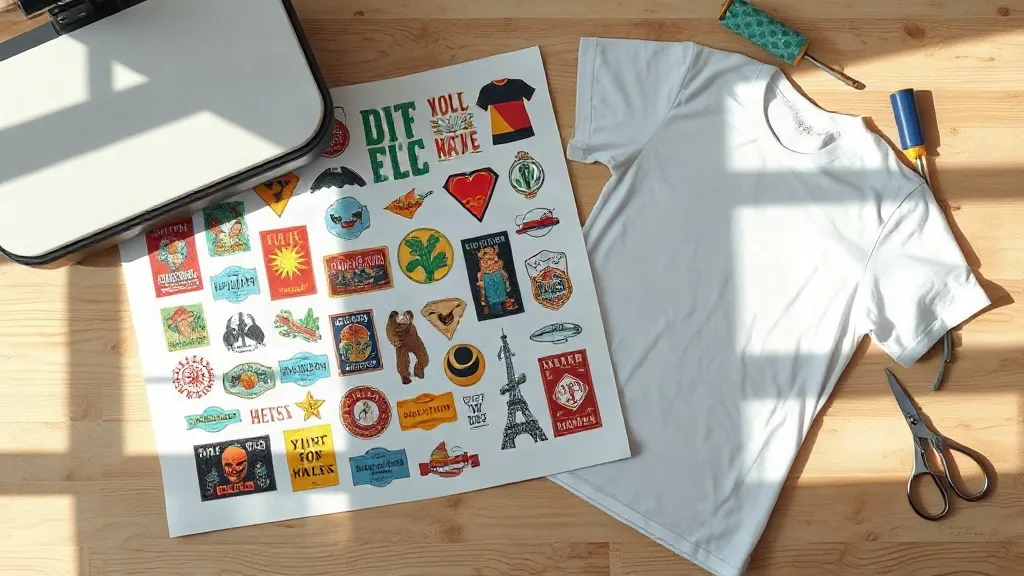
If you run a small print shop, a school spirit-wear side hustle, or a growing online apparel brand, the bottleneck is rarely the design. It is the setup. Cutting, weeding, aligning, and pressing one shirt at a time eats hours that never show up on an invoice. A DTF Gangsheet solves that specific problem: instead of ordering transfers one design at a time, you fill a single large sheet with every logo, name, and number you need, then press them as orders arrive. The result is fewer reorders, less waste, and a workflow that scales without adding a second pair of hands.
This guide is written for people who already buy blank tees, hoodies, and totes and want a repeatable decoration process. We will cover how gangsheets are priced and laid out, how to prepare artwork so it presses cleanly, and where most beginners lose money. Everything here assumes you are working with DTF film transfers and a heat press, which is the most common combination in small shops today.
What a DTF Gangsheet Actually Is
Direct-to-film printing works by printing your artwork onto a special film with water-based pigment inks, then applying a hot-melt adhesive powder to the wet ink. The powder fuses into the ink, the film is cured, and what you end up with is a flexible transfer you can store flat and press onto fabric whenever you need it. A gangsheet is simply the largest film size your printer or supplier runs, packed with multiple designs so the cost per print is shared across everything on the sheet.
The economics matter more than the terminology. Most suppliers price a gangsheet by the running inch or by square footage, not by the number of designs. That means a sheet filled edge to edge with small logos costs roughly the same as a sheet with two large back prints. Shops that understand this stop thinking in single transfers and start thinking in sheets per week.
Why it fits blank apparel workflows
Blank apparel sellers usually carry a fixed catalog: a few tee styles, a hoodie, maybe a tote or a cap. That consistency is exactly what gangsheets reward. You can build a sheet around one product line, keep the transfers in a drawer labeled by style, and press only what sells. No minimum order per design, no inventory of finished shirts sitting in a bin waiting for a buyer who may never come.
How to Build a Sheet That Saves Money
The most common mistake is treating the sheet like a canvas rather than a cost sheet. Before you place a single design, decide how the sheet will be used. A sheet built for a weekend market is different from a sheet built for a 40-piece team order.
- Sort designs by size class. Group small chest logos together, medium left-chest and sleeve prints together, and large back prints together. Mixing sizes leaves awkward gaps that you still pay for.
- Leave a real gutter. Keep at least 0.25 inch between designs and half an inch from the sheet edge. Trimmed-too-close transfers curl during pressing and pick up stray powder.
- Fill remaining space with best-sellers. Any leftover area should go to a design you know moves, not to a test idea. Dead space is the only true waste on a gangsheet.
- Duplicate high-volume names. If you are printing a team roster, repeat popular sizes and names within the sheet instead of ordering a second run later.
A practical habit: keep a running list of designs you press most often, and rebuild the sheet around that list every time you order. After two or three cycles you will know your average cost per transfer almost exactly, which makes quoting custom work far less stressful.
Artwork Preparation That Prevents Rework
Most failed presses trace back to the file, not the press. DTF handles gradients, fine detail, and full color well, but it has firm limits worth respecting.
Resolution and color
Supply artwork at 300 DPI at final print size. Upscaling a small web graphic rarely ends well, especially on text. Keep files in RGB, since the printer converts to ink values itself; sending CMYK files often produces duller output than expected. For white ink, remember that DTF lays a white base under every color, so semi-transparent effects will look more solid on fabric than they do on screen.
Text and thin lines
Anything thinner than about one point risks breaking apart after pressing, particularly on stretchy blends. If a client insists on hairline script, test it on a scrap before committing to a full run. Also avoid very small knockout text inside a solid shape; the white base can fill in and make letters unreadable.
File setup for the sheet
Build the sheet at the exact dimensions your supplier specifies, and place each design as a separate object with a clear bounding box. Name the file with the date and the sheet size so you can reorder the same layout later. Many shops keep a template file with guides for gutters and size classes, which turns a 30-minute layout job into a 5-minute one.
Pressing Transfers Onto Blanks: Settings That Hold Up
Press settings vary by film brand and fabric, so treat any number as a starting point and verify with a test piece. That said, a few principles apply almost everywhere.
- Pre-press the garment. Five to seven seconds of pressure removes moisture and wrinkles. Skipping this step is the number one cause of transfers lifting at the edges.
- Peel temperature matters. Some films are cold peel, some warm peel, some hot peel. Cold peel gives sharper detail; hot peel speeds up production. Know which film you bought.
- Use consistent pressure. Medium, even pressure beats heavy pressure. Too much pressure pushes adhesive into the fabric and creates a stiff, shiny patch.
- Repress after peel. A short second press with a cover sheet locks the edges and improves wash durability noticeably.
For blends and performance fabrics, lower the temperature slightly and extend the time rather than the other way around. Polyester is sensitive to heat and can show press marks or dye migration, especially on darker colors. A cover sheet and a slightly cooler platen solve most of it.
Where Shops Lose Money (and How to Avoid It)
Three leaks show up again and again. First, ordering sheets too small and paying a premium per transfer; a larger sheet almost always lowers unit cost if you can fill it. Second, storing transfers loosely in a drawer where dust and humidity degrade the adhesive; keep them flat, dry, and in a closed sleeve. Third, pressing without a scrap test on a new fabric lot, which turns a small color shift into a full reprint.
There is also a quoting problem. If you price custom shirts by feel rather than by measured transfer cost plus blank cost plus press time, busy weeks can quietly lose money. Track a handful of jobs, calculate your real per-piece cost, and the pricing conversation with clients gets much easier.
Frequently Asked Questions
How many designs can fit on one DTF gangsheet?
It depends entirely on design size. A sheet packed with small left-chest logos can hold dozens of prints, while a sheet with large back designs may hold only a few. Because most suppliers price by sheet dimensions rather than design count, filling the space with sellable designs is what drives your cost per transfer down.
Can I press DTF transfers onto 100% cotton and polyester blends?
Yes, DTF adheres well to cotton, cotton-poly blends, and most synthetics. The settings change: cotton tolerates higher heat, while polyester needs a slightly lower temperature and a cover sheet to prevent shine and dye migration. Always run a test press on a scrap of the exact fabric you plan to use.
How long do unused transfers last before they go bad?
Stored flat, dry, and away from direct sunlight, most DTF transfers remain usable for many months. Humidity is the real enemy, so avoid damp basements and keep transfers in sealed sleeves. If a transfer feels tacky or the powder looks clumped, test it on a scrap before using it on a customer order.
Do gangsheets work for one-off custom orders?
They can, but the value comes from batching. A single custom order rarely justifies a full sheet on its own. The practical approach is to collect several orders, fill the sheet with those plus a few best-sellers, and press the one-offs as they come in. That way the sheet pays for itself even when individual orders are small.
What is the biggest mistake beginners make with DTF gangsheets?
Leaving empty space and skipping the pre-press. Dead space means paying for film you never use, and skipping the pre-press causes edges to lift after washing. Fix those two habits and the rest of the process becomes far more forgiving.